The good news is that nature is extremely generous. Science has already proven that nutrition is the most powerful tool we have to avoid hypertension, high cholesterol, and heart attacks. It’s not just about “being on a diet,” but about choosing the right weapons to protect your life.
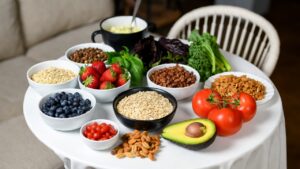
Below, we’ve listed 7 foods that act as true shields for your heart:
- Oats: Rich in soluble fiber, they help “sweep” bad cholesterol (LDL) from your bloodstream.
- Berries: Strawberries and blueberries are packed with anthocyanins, which help lower blood pressure.
- Dark Leafy Greens: Spinach and kale are sources of Vitamin K, which protects your arteries.
- Beans and Legumes: Excellent substitutes for fatty proteins, helping to control blood sugar.
- Nuts and Seeds: Healthy fats that strengthen the heart muscle.
- Avocado: Helps reduce inflammation levels throughout the body.
- Tomatoes: A source of lycopene, an antioxidant linked to a lower risk of stroke.
The Great Challenge: How to Eat Well Without Getting Bored?
Knowing what is good for you is the easy part. The problem arises on a Monday night, when you’re tired and the only thing that comes to mind is a fried steak or heavy takeout. Many people give up on heart health because they believe healthy eating is synonymous with bland food or repeating lettuce and tomato every single day.
If you feel like you lack the creativity in your kitchen to take this definitive step for your health, it’s worth checking out a practical solution that has been helping thousands of people vary their menu effortlessly.
Extra Tip: If you want access to incredible combinations using these 7 foods and many others, click here to discover the complete library of healthy recipes and transform your kitchen today.
Real Analysis: Does “1,000 Delicious & Healthful Vegetarian Recipes” Actually Work?
After understanding that nutrition is the way forward, I decided to analyze a resource that is currently buzzing among nutritionists and health enthusiasts: the e-book 1,000 Delicious & Healthful Vegetarian Recipes.
As someone who values flavor as much as health, I tested the premise of this material. After all, does having a thousand options seem like overkill, or is it exactly what we need to keep from quitting our goals? Here is my honest review:
The Pros
What strikes you immediately is the incredible variety. Often, vegetarian cookbooks focus solely on salads. Here, the focus is on “real food.” You’ll find everything from robust main courses that satisfy even die-hard meat fans to desserts that aren’t harmful to your body.
- Ends Monotony: With 1,000 recipes, you could cook a new dish every day for nearly three years without ever repeating yourself.
- Accessible Language: This isn’t a book for professional chefs. The instructions are straightforward and use ingredients you can find at any local market or grocery store.
- Focus on Real Health: The material doesn’t just focus on “being vegetarian,” but on being healthy. It directly fights inflammation and helps with weight and blood pressure management.
- Value for Money: If you were to buy physical books with this amount of content, you’d spend a small fortune. The digital format makes it easy to access on your phone or tablet while you cook.
The Cons
Let’s be fair; no product is perfect.
- Overwhelming Options: For those who are very indecisive, having a thousand recipes might spark the question: “Where do I even start?” My suggestion is to bookmark your favorites right away.
- Lack of Photos on Every Page: Because this is a massive volume of content, it focuses much more on the step-by-step instructions and nutritional quality rather than ultra-produced photos for every single dish, which is understandable given the file size.
Is it Worth the Investment?
If your goal is to reduce meat consumption to protect your heart, but you’re afraid of going hungry or eating tasteless food, the answer is a resounding yes.
1,000 Delicious & Healthful Vegetarian Recipes isn’t just a cookbook; it’s an insurance plan for your heart. It removes the barriers of “lack of time” and “lack of ideas.” By adopting these recipes, you are literally cleaning your arteries with your fork.
Many families are already reporting improved cholesterol levels and more daily energy simply by swapping two or three heavy meals a week for these light, nutrient-dense options.
Conclusion: The Next Step for Your Health
Don’t wait for a medical scare to start caring for your heart. The foods we mentioned at the beginning of this article are the starting point, but this 1,000-recipe guide is the complete map to ensure you never lose your way on the path to health.
Take advantage of the limited-time promotional price and secure your copy. Your “future self” will certainly thank you for this decision today.
I want access to the 1,000 recipes and protect my heart now!
Did you enjoy this review? Share it with someone who needs an extra boost to start eating better!